Manual vs automatic cars: which is better?

Are you in the market for a new car and trying to decide between a manual or automatic? You’re not alone in wondering which one to choose. It’s a common question for drivers, especially as automatic cars become more popular.
The difference between manual and automatic cars is pretty straightforward, but which one suits you best depends on your driving style, budget, and simply what you find enjoyable.
But, to help you figure out which is the best choice for you, we’ve done a full comparison manual vs automatic, including why automatic cars are more expensive and the pros and cons of both.
The difference between manual and automatic cars
The main thing that sets manual and automatic cars apart is how you change gears. In a manual car, you have to use a clutch pedal and move the gear stick yourself. It takes a bit of coordination, but a lot of drivers love the control it gives.
An automatic car does all the gear changing for you. There’s no clutch, and the gear stick just selects modes, like P (park) and D (drive). You just focus on the pedals and steering, which can make things easier, especially if you’re a new driver or doing a lot of stop-start driving in a city.
There’s also something called AMT (Automated Manual Transmission), which is kind of a mix of both. It’s basically a manual gearbox that shifts gears automatically, so you get a bit of both worlds.
In a nutshell:
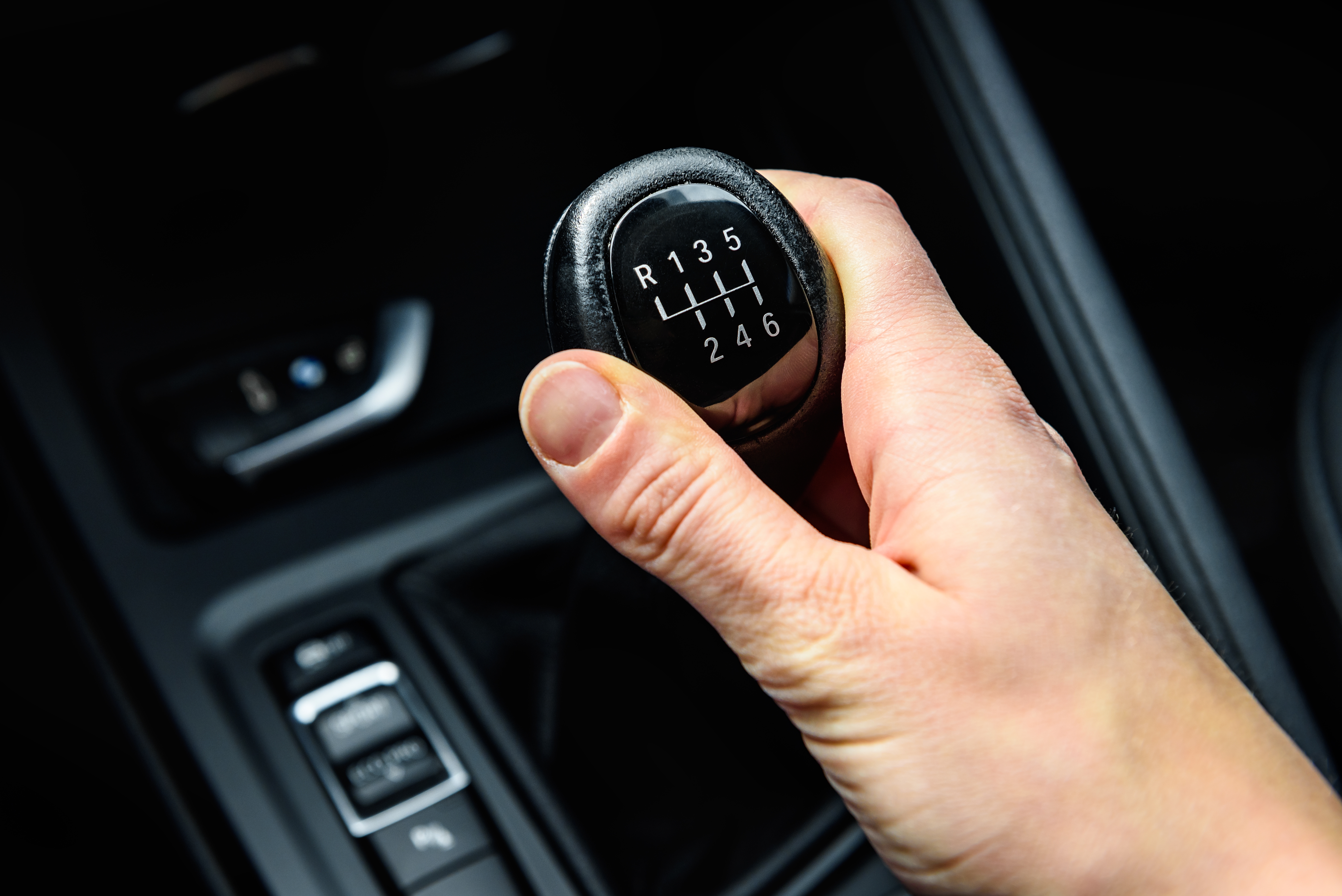
Manual cars: Manuals have a traditional numbered gear stick and a clutch pedal which you use yourself.
Automatic cars: Automatics have no clutch pedal and they change gears for you using a fully automatic system. The gear stick is just a driving mode selector.
AMT cars: AMTs have a manual gearbox but do the clutch and gear shifts for you. There’s no clutch pedal, and the gear stick looks like an automatic, but the system is still manual.
Why are automatic cars more expensive than manual?
You might have noticed that automatic cars are more expensive to buy, and this is a consideration for lots of people when deciding between automatic or manual.
There’s a few reasons automatics are typically more expensive. One main reason is because the technology is a lot more complicated. The sensors, computers, and hydraulic parts that do the gear changes smoothly for you cost more to manufacture and maintain.
Another is that, generally speaking, automatics can be seen as a more premium option, because they’re more modern and simple to drive. Plus, because automatics are becoming more popular nowadays, the demand has pushed the prices up too.
Is automatic easier than manual to drive?
Most people would agree that automatics are easier than manuals to drive, simply because there are fewer things to think about. Without a clutch or gear stick to worry about, automatics are much simpler to get the hang of. This could be especially handy if you’re learning to drive, as you can concentrate on the road and other drivers instead of changing gears or stalling.
On the flip side, some people don’t actually like that automatics do the manual work for you. If you like being in control of the gears and you’re used to it, you may prefer to stick to what you know.
Let’s look at some of the pros and cons of a manual vs an automatic in more detail.
The pros and cons of an automatic car
Pros:
Easier to drive: Automatics take care of all the gear changes, so you don’t need to think about when to shift or use a clutch. You can just select ‘Drive’ and go!
Great for traffic: Stop-start traffic becomes less stressful without constant clutch control and gear changes. You can just focus on braking and accelerating.
No risk of stalling: Since there’s no clutch, there’s no chance of stalling the engine, which can be a big confidence boost for new or nervous drivers.
Good for new drivers: Because you don’t need to think about the clutch or gears they’re ideal for new or unconfident drivers who can then concentrate on the road.
Cons:
More expensive upfront: Automatic cars can sometimes cost more upfront than manuals, mainly due to more complex technology.
Expensive repairs: If something goes wrong with the gearbox or other parts, automatic cars are generally more costly to fix or replace.
Less control over gear changes: The car decides when to change gears, which might not always match what you want, especially if you like to be in control.
Potential for lower fuel efficiency: Some older or cheaper automatics may use more fuel than manuals, though many modern systems have narrowed this gap.
The pros and cons of a manual car
Pros:
Cheaper to buy: Manual cars are usually cheaper to buy upfront at the moment.
Cheaper maintenance: Because they have fewer complex parts, they’re also usually cheaper to service or repair.
Potentially better fuel economy: Some manuals can be more fuel-efficient, particularly in small or budget-friendly cars, helping you save money over time.
More driving control: You decide exactly when to change gears, giving you better control over acceleration, braking, and engine response. Some people also enjoy the hands-on feel of a manual car.
Cons:
Harder to learn: Learning to drive a manual takes more practice. Coordinating the clutch, gear stick, and pedals can be tricky for beginners!
More tiring to drive: Constantly shifting gears and using the clutch in slow-moving traffic can be tiring on the legs and mentally draining after a while.
Able to stall: Until you’ve had plenty of practice, it’s easy to stall the car, especially when pulling away on hills or in stop-start conditions.
Less safe: Having to use the gear stick means taking one hand off the wheel and potentially your eyes off the road.
Automatic vs manual side by side comparison
Here’s a quick at-a-glance comparison to help you weigh up both options.
Automatic cars |
Manual cars |
|
|---|---|---|
Pros |
• Easier and less tiring to drive • No risk of stalling • Smooth, relaxed driving experience |
• Usually cheaper to buy and repair • Sometimes better fuel economy • Full control and a hands‑on driving feel |
Cons |
• More expensive to buy and repair • Sometimes worse fuel economy • Less engaging to drive |
• Harder to learn the clutch and gear stick • More tiring to drive • Risk of stalling |
Are they going to stop making manual cars?
With all the growing technology in the car industry, you might wonder if manuals are going to be around for much longer, and if it’s worth buying one. We say yes, even though it might feel like automatics are taking over, don’t count manuals out just yet.
The ban on new petrol and diesel cars from 2035 will have an impact on manual cars, because electric cars will become more and more common, and these mostly use automatic transmissions. This means that manuals will probably become less common over time. But, they’re not going anywhere anytime soon.
And even when new petrol and diesel cars aren’t in production anymore, used models will still be available on the market if you want one.
Should I learn manual or automatic?
If you’re stuck wondering if you should learn manual or automatic, it really depends on you. The big bonus of learning manual means you can drive pretty much any car, anywhere. It’s handy if you want flexibility or plan to drive abroad where automatics might not be as common, or are more expensive to rent.
But, learning automatic is significantly quicker and easier, which is great if you want to get on the road fast or mainly drive in towns and cities.
Just remember, if you pass your test in an automatic, you won’t be legally allowed to drive a manual without retaking it. It might be a good idea to learn in a manual car so you have the option of driving one, but use an automatic for your day to day driving if you prefer. That way, you always have the choice.
So, is automatic transmission better than manual?
At the end of the day, there’s no clear winner in the automatic vs manual debate; it comes down to what you prioritise.
One of the major automatic car advantages is their simplicity. Automatics are undoubtedly easier to drive, especially as you don’t need to worry about gear changes or the clutch. But, manuals offer more control, often better fuel economy, and can be cheaper to buy and repair. Ultimately, whether automatic or manual is better for you depends on your lifestyle, budget, and driving style.
At Car Finance 247, we work with a panel of lenders to help you find PCP and HP car finance for a vast range of manual and automatic vehicles.
Ready to get started? Get your quote today and take the first step towards financing your next car.
Disclaimer: Car Finance 247 Limited is a credit broker, not a lender. Finance is subject to status and affordability. We do not offer financial advice. Terms and conditions apply. There are no guarantees of approval.