

Interest rates can affect car finance. When prices everywhere go up, it can affect how much you can borrow on your loan and your monthly payments.
While interest rates have come down from their recent peak, inflation remains above the Bank of England’s 2% inflation target. The outlook remains uncertain, so it's still important to understand how this can affect the cost of financing a car.
This guide explains how inflation impacts interest rates, borrowing power, and car prices. We’ll also share tips to help you handle rising costs.
Key takeaways
Inflation and rising interest rates can increase the cost of car finance
Higher rates typically mean higher monthly payments on new finance agreements
Fixed-rate deals protect you from rate rises during the term of your agreement
A stronger credit score could help you access better rates
Shopping around and considering a larger deposit can help reduce overall costs
What is inflation, and how does it affect car finance?
Inflation is the rate at which prices increase over time, usually compared to the previous year. When it comes to car finance, inflation can influence both the cost of cars and the interest rates on loans.
Inflation can increase the cost of new and used cars. When inflation rises, it costs car manufacturers more to make the cars. They then, in turn, raise the prices of how much they are to buy. And, as new cars become more expensive, more people want to buy used cars. Because of this higher demand, it can make used cars more expensive too.
At the same time, lenders might adjust their interest rates to manage the impact of inflation, which could also increase the overall cost of your finance agreement.
How inflation affects interest rates
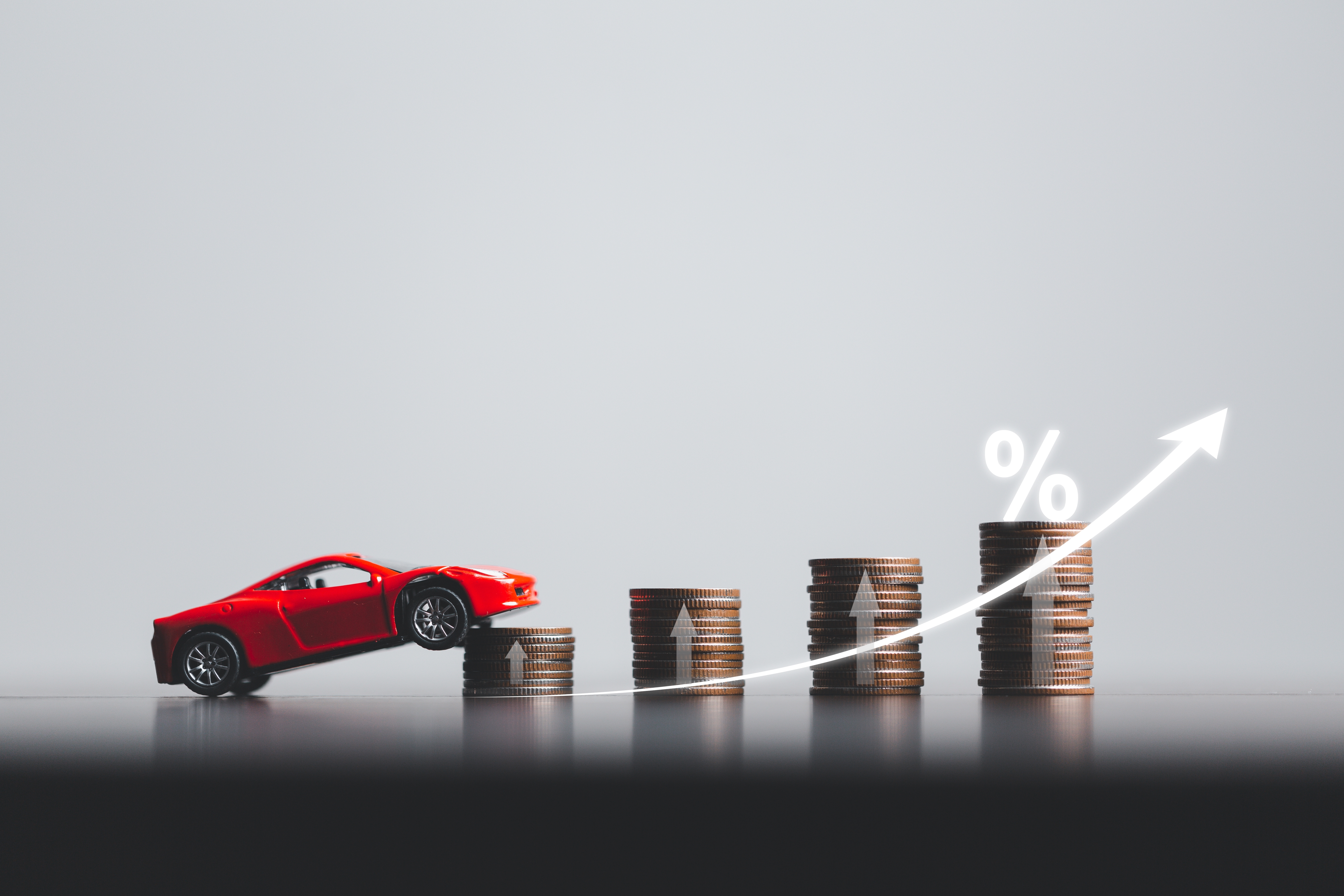
Inflation and interest rates are closely linked. When inflation rises, the Bank of England often raises interest rates to help control it. Higher interest rates, in turn, raise borrowing costs, which can cut spending and help control inflation.
For car finance, this can mean higher monthly payments and greater overall cost. If you already have a fixed-rate finance deal, your payments will stay the same for the remaining term of the fixed-rate period. However, if you’re on a variable-rate deal or looking to take out a new loan, rising interest rates could mean paying more each month. Variable-rate car finance deals are less common in the UK, and Car Finance 247 do not currently offer these.
It's important to note that interest rates vary between lenders, and the rate you’re offered will depend on your individual circumstances, including your income, credit score and financial history.
What is APR and how does it relate to the base rate?
APR stands for Annual Percentage Rate. It shows the total annual cost of borrowing money and includes the interest charged on your finance agreement, as well as any fees. APRs give you the full picture of the total cost of borrowing, making it easier to compare finance deals.
Lenders use the Bank of England interest base rate as a benchmark, so when this changes, car finance APRs often move in the same direction over time. However, the APR you're offered will also depend on your individual circumstances, including your credit history, income and affordability, as well as the lender's own lending criteria.
You can find out more in our guide to interest rates & APR.
How inflation affects your borrowing power
Borrowing power is the amount a lender is willing to let you borrow based on your financial situation. High inflation could reduce your borrowing power in a few ways:
Higher interest rates: Rising rates mean higher monthly payments. Lenders assess whether you can afford these payments when deciding how much to lend.
Less disposable income: Inflation raises the cost of living in general, leaving many with less money each month. Lenders consider your income and outgoings, so higher living costs could mean they offer you a lower loan amount.
Strict lending criteria: In times of high inflation, lenders may be stricter with their lending to reduce risk. This could mean requiring larger deposits or offering lower loan amounts.
Bear in mind, though, that lenders assess affordability based on individual circumstances, so it’s worth checking what options are available to you.
Tips to get the best deal despite inflation
Shop around for the best deals – Interest rates vary between lenders, so it’s important to compare options. Even a small difference in rates could save you money over the term of your finance deal.
Think about a larger deposit – Putting down more money can decrease what you need to borrow. This, in turn, could lower your monthly payments and the total interest you’ll pay. A larger deposit may also make you a less risky borrower to lenders, which could get you a better rate.
Choose a fixed interest rate – Opting for a fixed-rate finance deal means your payments won’t change, even if interest rates rise. This can make budgeting easier and protect you from future rate increases during the term of your finance agreement.
Look for shorter finance terms – Choosing a shorter term for your finance deal could reduce the total interest paid. While monthly payments may be higher, you’re more likely to save money overall by paying less interest. It’s worth considering if you can afford the higher payments.
Improve your credit score – A higher credit score could help you get lower interest rates. Paying bills on time, reducing credit card balances, and checking your credit report for errors can help. Better rates can reduce the cost of your finance deal, which could help to offset the impact of rising interest rates.
However, if you don’t have a good credit score, we could still help. We work with specialised lenders who could offer bad credit car finance and be able to find you a deal. Credit is subject to status.
The takeaway
Understanding how inflation and interest rates affect car finance can help you make informed decisions when choosing a finance agreement.
While inflation has eased from recent highs and interest rates have started to come down, borrowing costs remain higher than in previous years and the outlook is still uncertain. Though there isn’t anything you can do to control inflation, learning about it is key to exploring the best deal for your budget. For example, this might mean looking at a shorter loan term, or a fixed-rate finance deal to limit the interest you pay.
As always, make sure to read the terms of any finance agreement carefully and seek independent financial advice if needed.
Note: The information in this guide is for general purposes only and does not constitute financial advice. For advice tailored to your individual circumstances, consider speaking to a qualified financial advisor.
-
How does inflation affect car prices?
Inflation can push up the cost of making, transporting and selling cars for manufacturers. This, in turn, hikes up the cost of those cars to buy. However, inflation is only one factor that affects car prices, and things like supply and demand, the number of vehicles available, and changes in the car market could also have an impact.
-
Is it better to get car finance when interest rates are low?
It might be better to wait for lower interest rates, because it reduces your borrowing costs. If you don’t desperately need a car and you’re on a tight budget, it could be worth it. That said, there is no telling when interest rates will fall and it’s not always feasible to wait if you need a car. Plus, lower interest rates can make borrowing cheaper, but they aren’t the only thing to consider. Your own credit history and affordability may also impact the APR you’ll be offered.
-
Will car finance get cheaper if interest rates fall?
Car finance could become cheaper if interest rates fall, as lenders may reduce the APRs they offer on new agreements. But, this won’t happen straight away or automatically, and the rate you get will still depend on your own circumstances.
-
What is a good APR for car finance in the UK?
There isn’t one APR that’s right for everyone. The rate you’re offered depends on things like your credit history, income, affordability and the lender’s criteria. That’s why comparing different APRs is so important, so you can find an option that works for your budget.
-
Do interest rates affect car finance?
Yes, interest rates can affect car finance. When interest rates are higher, getting any kind of loan can become more expensive. That means the total loan is more expensive and therefore your monthly repayments. But it’s important to note that if you have an existing agreement, your payments will stay the same.