7 of the most confusing UK road signs


Road signs are supposed to be quick and easy for drivers to understand, but some of them can feel like you're trying to decipher hieroglyphics while travelling at speed. At Car Finance 247, we get that road signs can be confusing, especially those you don’t see everyday!
So, whether you’re revising for your theory test or you simply want to refresh your memory on some of the more head-scratching ones out there, this guide’s for you. We’ve picked out 7 of the most confusing signs baffling UK drivers and explained what they actually mean.
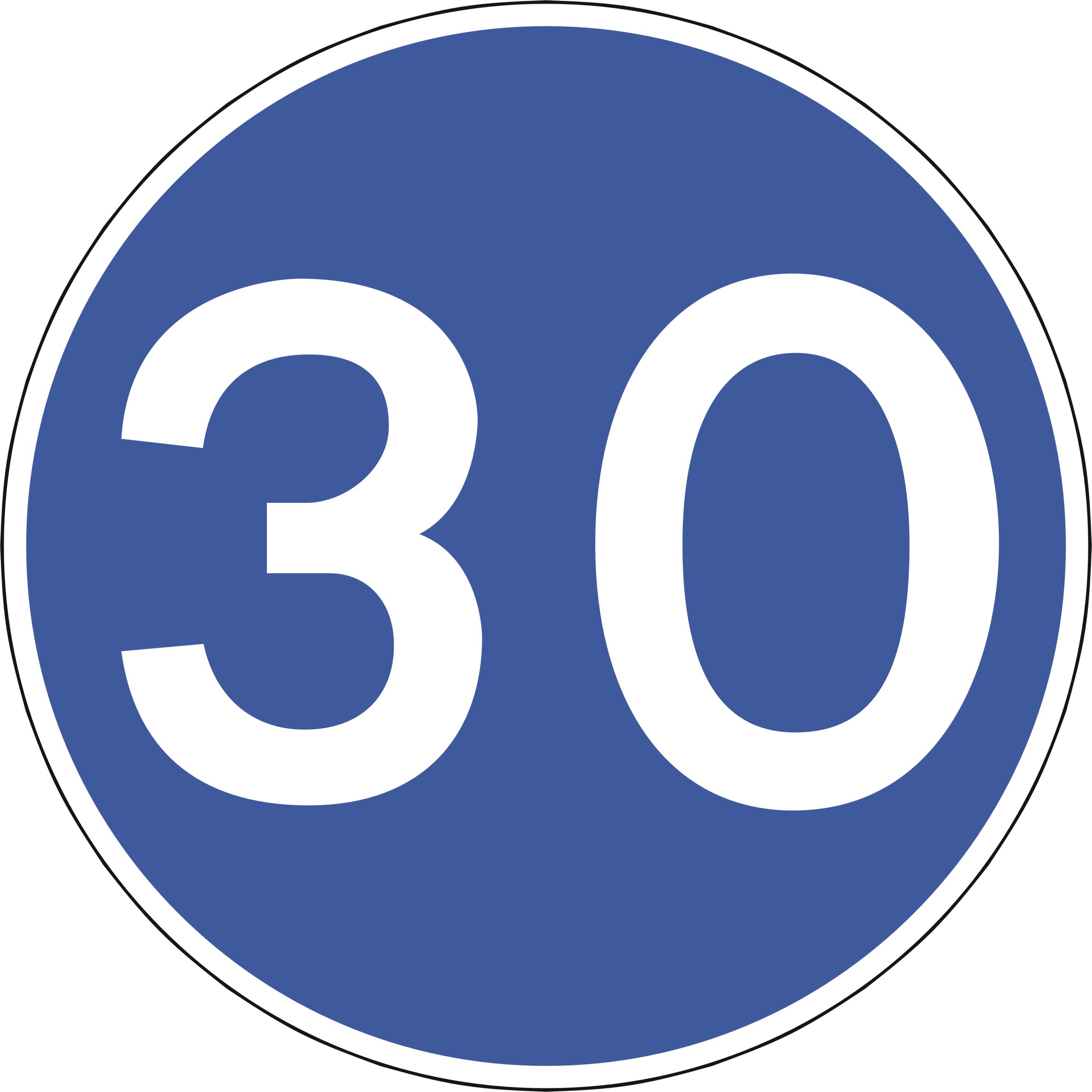
1. Minimum Speed
While we’re all used to looking out for the red and white speed limit signs displayed on the side of the road, did you know minimum speed signs exist too? Instead of red, these round signs are blue with white lettering. When you spot this blue speed sign, you must drive at a speed over the number displayed assuming it’s practical and safe to do so.
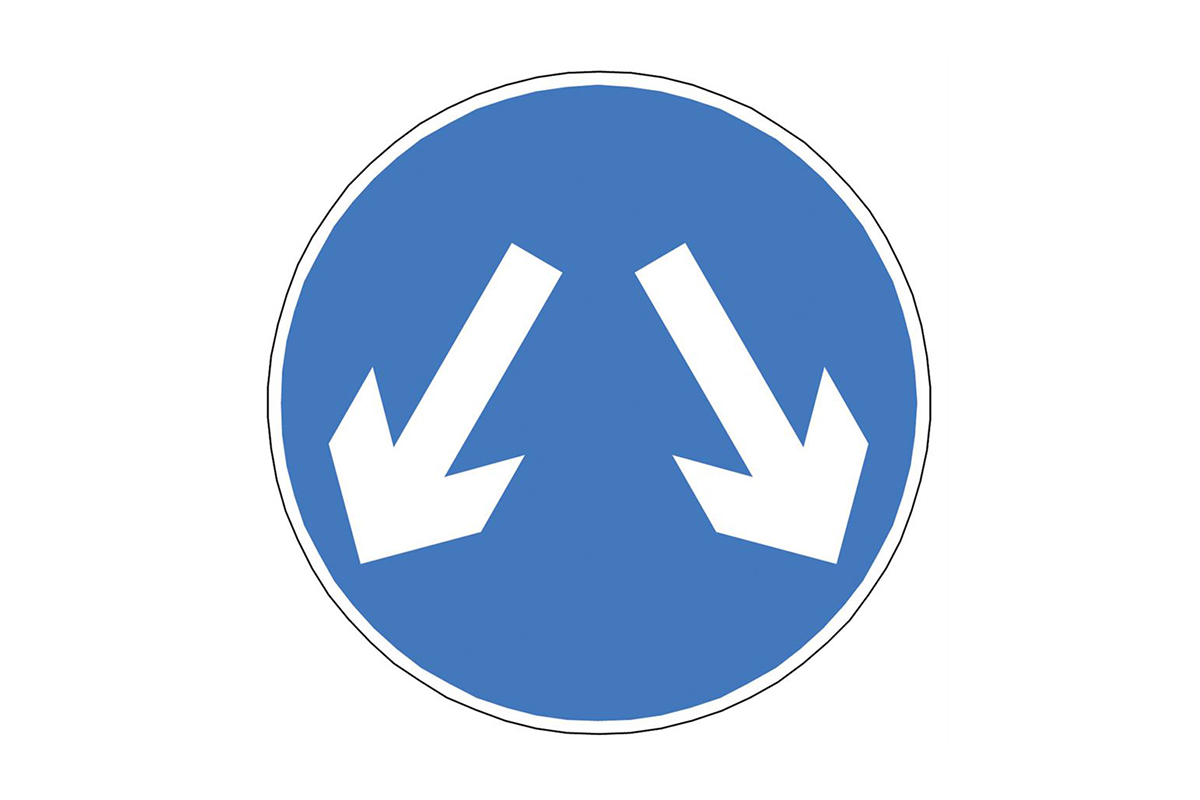
2. Vehicles may pass either side to reach same destination
Another confusing, but thankfully rare, road sign is this circular blue two arrows sign. Though it depicts two white arrows pointing downwards in different directions, the good news is that you don’t have to choose one direction over the other! It just means that vehicles may pass either side to reach the same destination.
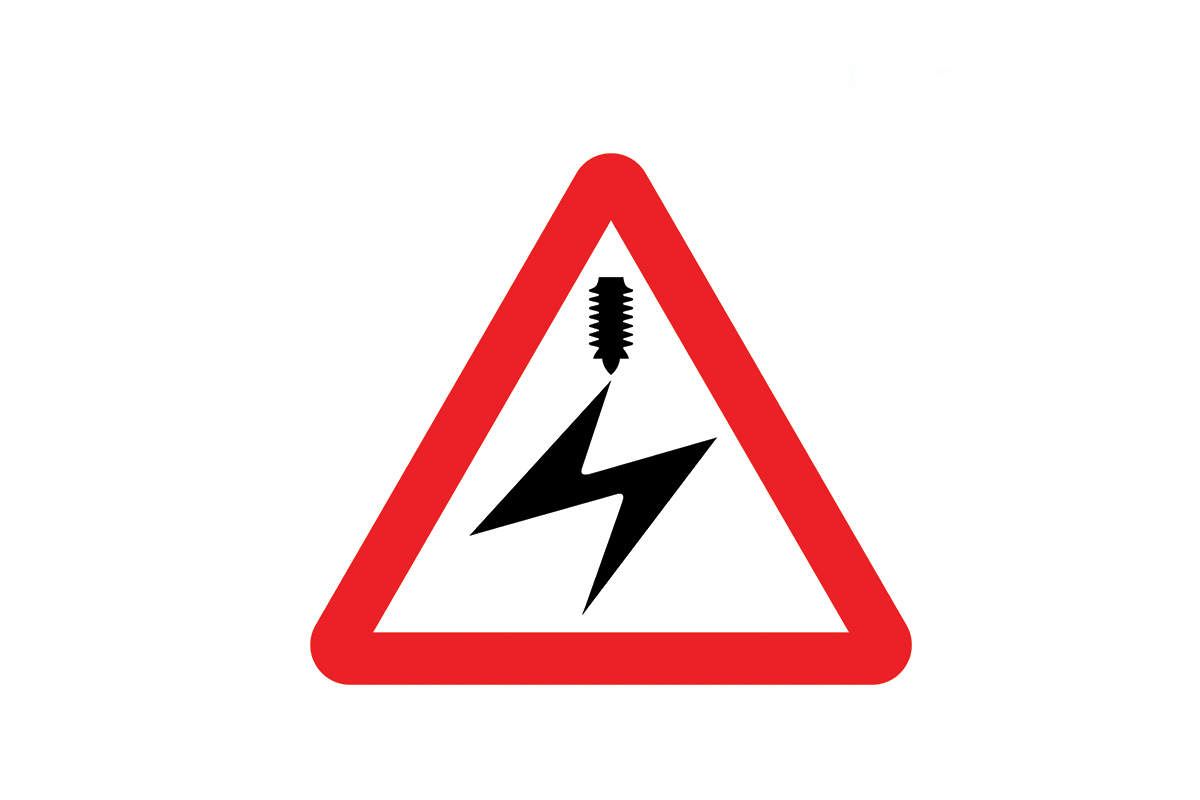
3. Overhead electric cable
It’s worth knowing this lightning bolt road sign meaning for your safety, particularly for drivers of taller vehicles. With its red triangle shape and distinctive symbol, this lightning road sign clearly signals danger, but it looks like something you’d be more likely to find on your electric hair dryer or other home appliance than on the road! But when you come across this lightning bolt road sign, you should be aware that there’s an electrified overhead cable ahead.
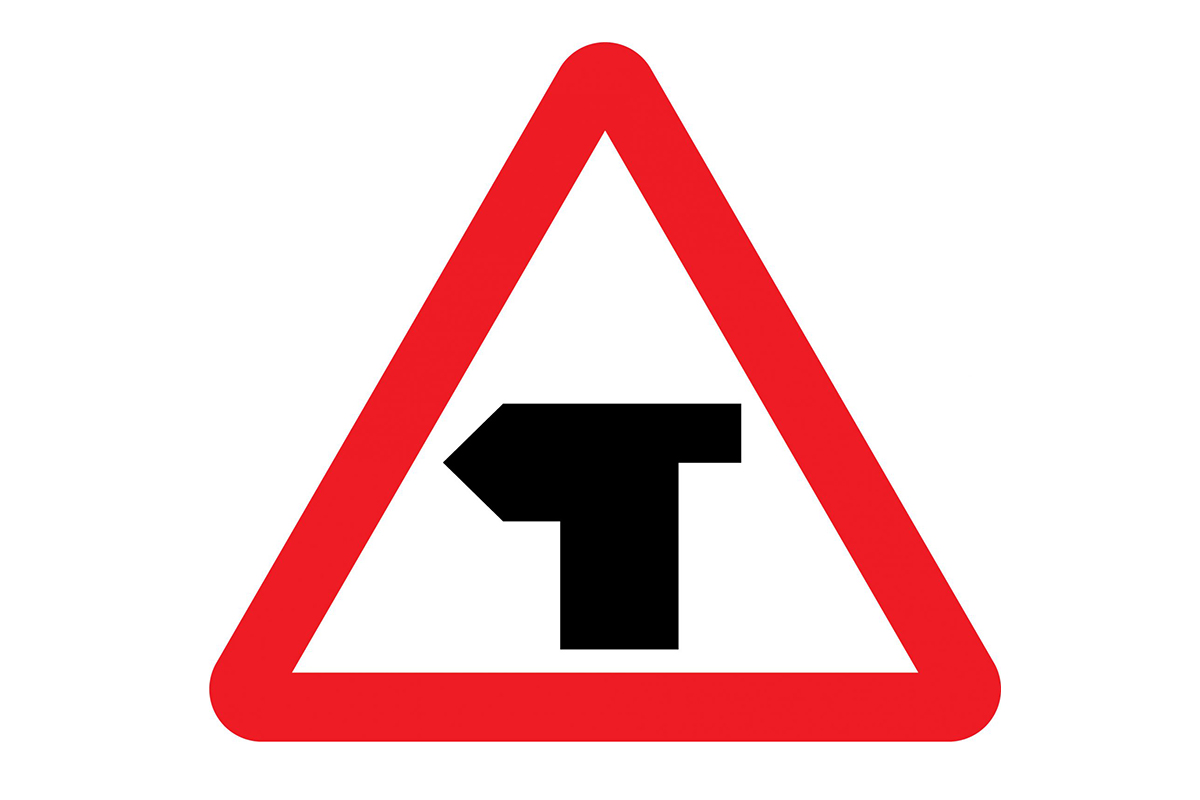
4. T-junction with priority over vehicles from the right
This puzzling sign features a wide T and an arrow pointing left, which means that you’re approaching a T-junction with priority over vehicles from the right.
It’s one of the most confusing road signs at a T junction and can easily catch drivers off guard. But luckily, it’s also one of the most uncommon T junction sign UK drivers will come across, so you’re unlikely to need to decipher it on your daily drives!
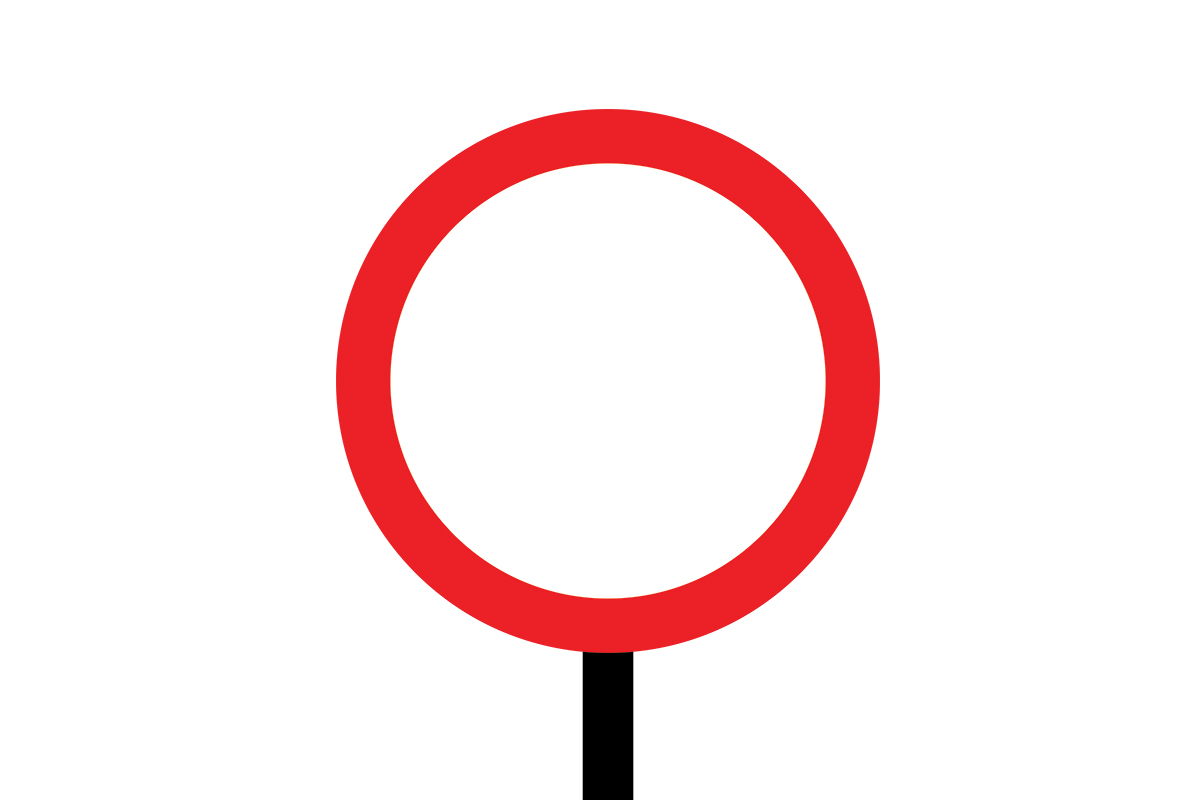
5. No vehicles
No, this sign isn’t a printing mistake, we promise! A red circle with a blank white space like this means no vehicles allowed. That includes cars, motorbikes, and bicycles. The only exception to the rule is when your bike is being pushed. The zone might not be in place 24 hours so look out for any nearby signs that indicate the times of day that it’s enforced.
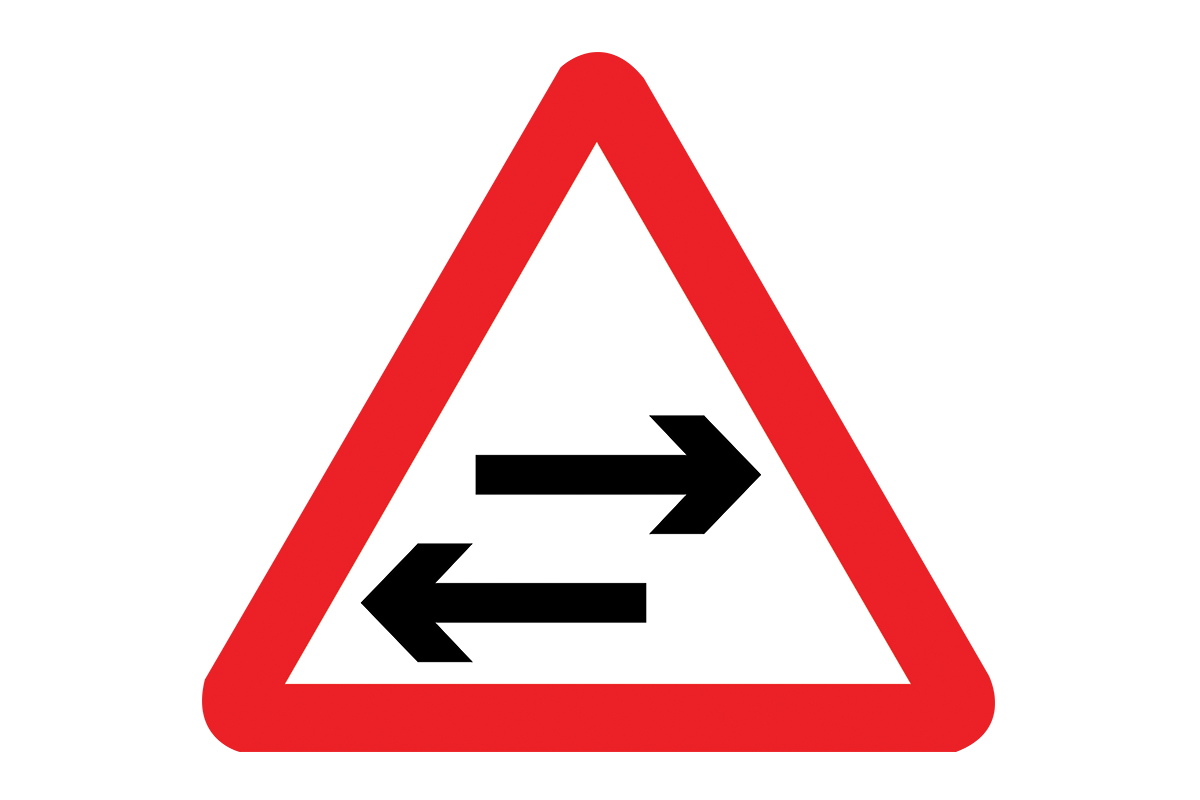
6. Two-way traffic crosses one-way road
Any sign with arrows pointing in multiple directions is bound to be confusing – and this one is no exception! A red triangle with two arrows – one pointing left and the other pointing right – is typically found on a one-way street. It means that the one-way road is coming to an end and will meet a two-way road when it does. In other words, two way traffic crosses a one way road at that point, and you can join that road in either direction. If you’re planning on turning right when two way traffic crosses one way, be sure to position your car well over to the right on the road.
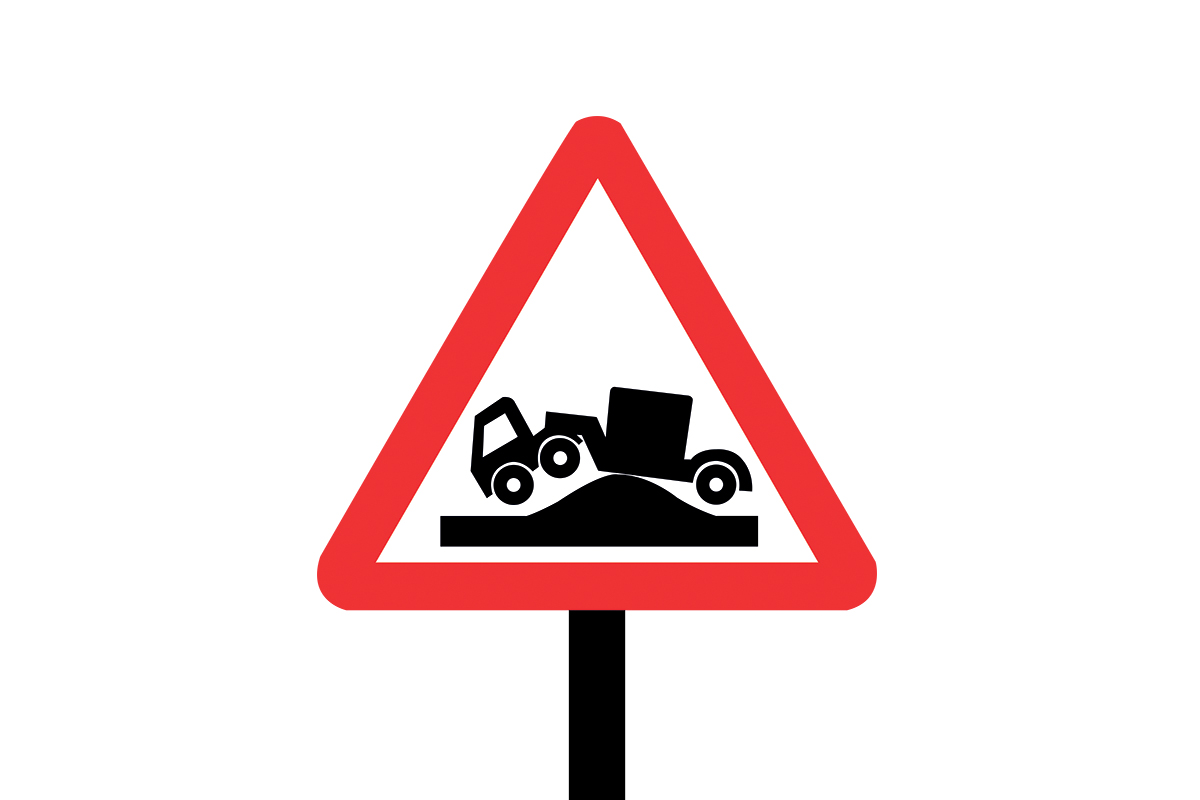
7. Risk of grounding
While this lorry leaping over a bump in the road may look more like a child’s drawing than a real road sign, it’s an important one for HGV drivers to know. This red triangle is the risk of grounding road sign, usually found near railway or tramway level crossings, or at a hump-backed bridge. What does risk of grounding mean, you ask? It warns that a change in road level could cause the underside of a large or low vehicle to hit the ground, causing damage or for it to get stuck.
Conclusion
There’s no doubt about it; road signs can be confusing, and it's always a good idea to refresh your brain on them, whether you're revising for your test or you've been on the road for years!
Want to brush up on more driving knowledge? Head over to our guides, or our blog where you’ll find more helpful tips and advice to keep you confident on the road. You might like:
Or, if you have any queries – including about bad credit car finance* – and want to discuss your options, give us a call. Credit subject to status*
Road signs FAQs
-
What do blue road signs mean?
Blue road signs usually give positive instructions, or give you information, but their meaning depends on if they’re circular or triangular. Circular blue signs give instructions you must follow. For example, a blue circle with an arrow pointing left tells you the direction you must go, and a blue circle with a number in it is the minimum speed limit on that road.
Rectangular blue signs often show helpful information, like directions on motorways, lanes for specific vehicles, or destinations of interest nearby.
-
How many road signs are there in the UK?
There are an estimated 4.6 million road signs across the UK. That’s a lot of signs to try and remember!
What makes it easier is that UK road signs are usually categorised by shape and colour to help drivers understand their meaning quickly. Circles give orders (blue for what you must do, red for what you must not do), red triangles are a hazard warning, and rectangles give information, with their colour varying depending on the road. -
What do triangle road signs mean?
Triangle road signs are warning signs. They almost always have a red border to signal danger, and serve to alert drivers to potential hazards ahead, like sharp bends, junctions, or pedestrian crossings. Most triangle signs point upwards, but the ‘give way’ sign points downwards.
-
What do circle road signs mean?
Circle road signs give orders you must follow. Red circles tell you what you must not do, like 'no entry', while blue circles show what you should do, such as 'turn left'. Think of red as negative and blue as positive. For speed limits, red circles show the maximum speed allowed, and blue circles show the minimum speed you must drive.
-
What do brown road signs mean?
Brown road signs point to tourist attractions, places of interest and facilities. They have a brown background with white text and symbols, and they’re there to direct drivers to places they might want to visit. You’ll see them on various different types of roads, directing you to things like historic sites, museums, parks, and zoos.