

For many people, buying or selling a car can feel confusing. There’s a lot of paperwork involved, and one of the most important is the car log book, also known as the V5C.
But what is a V5C log book exactly? This guide will give you a clear, easy-to-understand overview of how it works, what information it has, and why it’s so important when buying or selling a vehicle.
What is a V5C log book?
A V5C car log book is an official document issued by the Driver and Vehicle Licensing Agency (DVLA). Car log books are so important because they provide the DVLA with important information about a vehicle and its keeper.
This also helps buyers, as it keeps the market from being flooded with lost or stolen cars, and means buyers can be confident in what they’re purchasing.
“A V5C helps ensure the DVLA has an accurate record of who is responsible for taxing a vehicle, and it helps buyers confirm key information about the car before they buy it”. Ross Wild, Head of Lenders, Car Finance 247
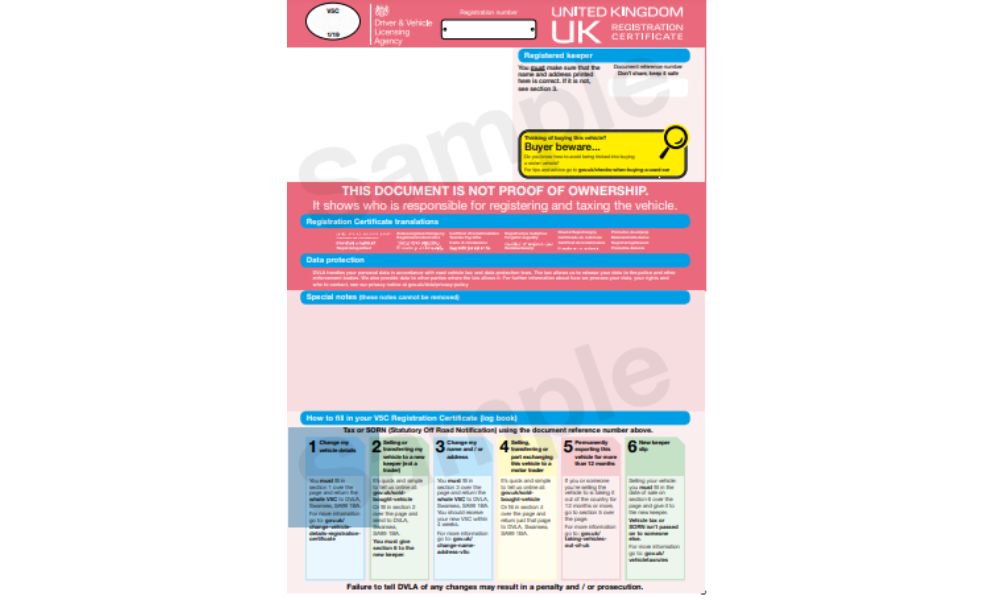
What is a log book and what does it show?
A V5C log book serves as proof of vehicle registration and identifies the registered keeper.
Some of the most important information you’d find in a log book includes:
Vehicle details – Basic information about the vehicle, including technical and registration details.
Make – The manufacturer of the vehicle.
Model – The specific model name of the car.
Fuel – The type of fuel the vehicle uses (e.g. petrol, diesel, hybrid, or electric).
Colour – The officially registered colour of the vehicle.
Registered keeper – The person currently responsible for the car, including tax, MOT and insurance.
Previous keeper – Information showing how many registered keepers the vehicle has had in the past.
What does a car log book look like?
A V5C log book is a paper document with multiple pages. There are two versions of the V5C log book. The older style, introduced in 2004, is blue and green. You might still see this with older cars. The newer version, introduced in 2012, is red and pink. Both versions are still valid, although the DVLA recommends updating to the current style.
The front reads ‘UK REGISTRATION CERTIFICATE’ and features the unique 11-digit document reference number, which is needed to tax the vehicle. This V5C reference number also allows you to make important updates online without needing the physical log book in front of you.
V5C and car ownership
It’s important to note that the V5C form shows who the registered keeper is, not the legal owner.
This is a key distinction. These are often the same person, but not always. There are exceptions. For example, if it’s a company car, a car on finance or a leased car.
So who is the legal owner of a car? The owner is the person or company that legally owns it, while the registered keeper is the person responsible for using and maintaining it.
Who’s the registered owner of a car on finance?
If you've bought a car on finance, you are the registered keeper, not the owner. You only become the owner when you’ve completed your final payment and the ownership is transferred to you.
The finance company is the owner until then, but you will be the registered keeper and have your name in the log book because you’re responsible for using and maintaining the vehicle.
The main exception is a bank loan. If you use a personal loan to buy a car, you are the owner and keeper from the start.
For more information on this, read our guides on how to find the registered keeper of a vehicle, and what happens at the end of a car finance agreement.
Your responsibilities around a car log book
When you become the keeper of a vehicle, you’re responsible for keeping the DVLA updated with accurate information. This means notifying them if you change address, change the vehicle’s colour, sell or transfer the vehicle, or need to replace a lost or damaged log book.
If you move house, it’s important to update your address as soon as possible. It’s free and easy to change a V5C address online. Failure to change your address on your V5C logbook and driving licence can lead to a £1,000 fine.
Buying a used vehicle: What you need to check for with the car log book
When buying a used car, it’s important to check the V5C log book so you can ensure everything is as it seems. This ca help protect you from scams or stolen vehicles.
Here’s a checklist of things to review:
Does the seller’s name match the registered keeper?
Does the address match up?
Does the VIN match what’s on the chassis?
Is the registration number correct?
Is the V5C watermark present?
Does the car's colour match the V5C description?
These are the standard log book checks, but it’s also important to check a used car’s history before buying.
The log book transfer process
When you buy a used car, there’ll need to be a log book transfer between you and the previous registered keeper. Here’s how a V5C change of owner and registered keeper works.
Once the sale is complete:
Get the green ‘new keeper’ slip – The seller should give you the green ‘new keeper’ slip from the V5C log book. You’ll need this to tax the vehicle before driving it away.
You tax the vehicle immediately – Car tax does not transfer between owners, so the vehicle must be taxed again as soon as you buy it.
The seller updates the DVLA – They can do this online for a faster process. If completed by post, they send the full V5C to the DVLA, but still give you the green slip.
The new V5C is posted to you – The new V5C logbook will be sent to you by the DVLA and arrive at your address within 5 working days.
Selling a car: What you need to do with the car log book
If you’re the one selling the car, it’s important to understand your responsibilities. A check list of tasks should include:
Notify the DVLA straight away
Complete the V5C and give the new keeper the green slip
Send the DVLA the log book or destroy it if the transfer is done online
The V5C registered keeper information must be updated correctly and as soon as possible. The whole V5C transfer process can usually be completed online, which is often quicker than the post.
Conclusion: A car log book is a small but important document
A car log book is one of the most important things to keep hold of when you buy a car. It’s one document you should definitely store away for safekeeping.
You’ll need your V5C details to make important DVLA updates, from taxing the car to changing your address or updating keeper information.
Ensuring your V5C information is up to date helps the DVLA keep accurate vehicle records. This, in turn, helps protect buyers from ending up with a stolen or otherwise dodgy vehicle. Not updating it can also leave you with a hefty fine, so it’s important to make any necessary changes as soon as you can.